Salt of the Earth
Hey Everyone,
It’s Em back with another history filled newsletter. I hope your first week of Pride has been filled with nothing but sunshine and good vibes. Let’s get into it!
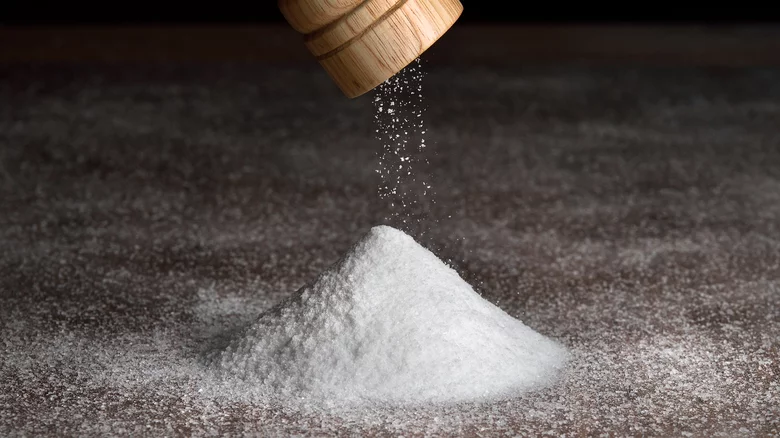
Have you ever looked at a single grain of salt? Something so simple but complex is important to sustaining everyday life. Looking at this unassuming pantry staple you never would think it had such a complex history, but in reality, this necessary seasoning was the foundation of many world economies. I had the pleasure of reading Mark Kurklansky’s Salt: A World History recently and wanted to share with you how this mighty stalactite influenced culture and today’s modern food production.
Until approximately 100 years ago, salt was one of the world’s most sought after commodities. In China there is evidence that suggests salt production occurred in the northern province of Shanxi as early as 6000 BCE, with other ancient civilizations also beginning to produce salt around the same time. In Shanxi they used a method known as “dragging and gathering” to harvest the mineral from the province’s salty lake. Around 800 BCE during the Xia Dynasty, the method of salt production changed. This method of producing salt involved filling clay vessels with ocean water and boiling it until it was reduced to pots of salt crystals. This technique later spread to Southern Europe via the Roman Empire.
Salt was incredibly important in the development of the Roman Empire. Most Italian cities were founded in proximity to saltworks starting with Rome, at the mouth of the Tiber. The first of the great Roman roads, Via Salaria, or Salt Road, was built to bring salt to Rome and across the interior of the peninsula. The Romans used salt to keep their army healthy — and as a culinary innovation. The Romans salted their greens, believing this to counteract the bitterness. This is the origin of the word salad, coming from salted. They also used salt to cure their ham and age their cheese. In 1318 the city of Parma took over 31 salt wells (called the Pallovicino Wells) to gain control of economic power through the production and distribution of salt and salted goods — this included Prosciutto di Parma and Parmesan Reggiano, whose prosperous economy still exists in the region today.
In other parts of the world, salt was used as a preservative prior to modern refrigeration. It had cultural traditions created to honor its importance and was even credited with stopping the Bubonic Plague from spreading in a French seaside town. It’s amazing to think that something you and I might take for granted can have such an impact. The next time you pull your salt shaker out of the cabinet, I hope you’ll take a moment to think about the cool, yet complicated history behind this nifty little mineral.
Now on to the food!
This week we have some incredible goodies from our friends over at Dave’s Fresh Pasta in Somerville. I used to live in Teele Square and loved walking there to get myself a sandwich and peruse their selection of incredible pastas and specialty foods. We are lucky enough to have the porcini ravioli as the Ravioli of the Week as well as some spinach pappardelle and bruschetta from the folks at Dave’s. If you are looking for a tasty snack I would suggest grabbing your favorite loaf of bread, topping it with some cheese (maybe the whipped ricotta from Forge?!), and then finishing it off with the bruschetta and a nice sprinkle of flaky salt.
If you need me I’ll be looking for Jimmy Buffett’s lost shaker of salt. Until next time!
Em and the Family Dinner Team